Showing posts with label Commentary. Show all posts

Saturday, January 9, 2016

Year in Review

Happy 2016!
During 2015 I had the great fortune of reading some unusually awesome books in class, either in their entirety or in small snippets selected by professors. A partial listing is included here.

GK Chesterton and Catholicism (A theology course about the expansive Christianity of the prince of puns; the following works are all his, except where noted)
  • The Napoleon of Notting Hill
  • The Ball and the Cross
  • Tremendous Trifles
  • The Blatchford Controversies
  • Heretics
  • The Well and the Shallows (incl. "My Six Conversions," "The Return to Religion," "The Ascetic at Large," "The Last Turn," "Babies and Distributism," "Church and Agoraphobia," "Reflections on a Rotten Apple," "A Century of Emancipation," "Sex and Property")
  • What's Wrong with the World (incl. "Family and the Common Man," "The Superstition of Divorce," and "Eugenics and Other Evils")
  • Orthodoxy
  • Everlasting Man
  • St. Thomas Aquinas
  • St. Francis of Assisi
  • Where All Roads Lead
  • The Thing: Why I am a Catholic
  • The Size of Chesterton's Catholicism by David W. Fagerberg
Christian Theological Traditions I (Another theo course, this one focusing on pre-Reformation Christian writings)
  • Early Christian Writings, ed. A. Louth
  • St. Anselm of Canterbury's Prayers and Meditations
  • On the Incarnation of the Word by St. Athanasius of Alexandria
  • St. Augustine's Confessions
  • St. Benedict's Rule
  • St. Bonaventure's Journey of the Mind to God
  • On the Sacraments by Cyril of Jerusalem
  • Sayings of the Early Christian Monks, composed of sayings of the Desert Fathers
  • St. Gregory of Nazianzus's On God and Christ
  • St. Irenaeus of Lyons's On the Apostolic Preaching
  • Select Writings of Origen, ed. R. Greer
  • Paul Evdokimov's Ages of the Spiritual Life

Saturday, August 8, 2015

Why I couldn't finish LoTR.

I have risked several friendships by admitting this over the summer: I started Lord of the Rings (The Fellowship of the Ring) and couldn't finish it. Maybe I'll come back to The Hobbit someday (which I hear is easier). My reasons for quitting LoTR are fairly straightforward and, to many, probably sound pretty lame.

  1. There's too much description of the landscape that I care very little for.
  2. In spite of the excessive landscape description, non-natural "things" are never described... Hearing what the hills surrounding my characters look like, while having barely any detail about what they are wearing, handling, and interacting with leaves me disengaged.
  3. It's very annoying reading people constantly singing without any tune guidance. 
Maybe I'll just watch the movies.

Tuesday, December 30, 2014

School wrap-up

I had a great opportunity to take a course called "The Heart's Desire" this semester and a course with an interesting title like that often has an interesting reading list like this. The 13 books we read in the class are below. The ones you should actually care about are highlighted. Notes attached where necessary.
  1. The Discerning Heart: Exploring the Christian Path by Wilkie Au and Noreen Cannon Au.
  2. Flow: The Psychology of Optimal Experience by Mihaly Csikszentmihalyi (*And yeah, I can pronounce that.)
  3. Words Made Flesh: Scripture, Psychology and Human Communication by Fran Ferder (*Really and truly excellent. The parts I read, that is. I don't have a lot of time for lengthy books at school, okay?)
  4. Your Sexual Self: Pathway to Authentic Intimacy by Fran Ferder and John Heagle
  5. Man's Search for Meaning by Viktor Frankl
  6. Globalization, Spirituality, and Justice: Navigating the Path to Peace by Fr. Daniel G. Groody, CSC (*Groody is the boss and also this is an excellent book. Read it and weep [and then go do something with your life].)
  7. Addiction and Grace by Gerald May (*Surprisingly wonderful)
  8. Seeds of Contemplation by Thomas Merton (*They say it's so good... and maybe it is... if I ever actually read it I'll let ya know.)
  9. A Sacred Voice is Calling: Personal Vocation and Social Conscience by John Neafsey
  10. Let Your Life Speak: Listening for the Voice of Vocation by Parker J. Palmer (*Ew.)
  11. The Road Less Traveled: A New Psychology of Love, Traditional Values and Spiritual Growth by M. Scott Peck (*Ignore his bizarre 1960s sexism and just go with it.)
  12. Letters to a Young Poet by Ranier Maria Rilke
  13. Dreams and Spiritual Growth: A Christian Approach to Dreamwork by Louis Savary, Patricia Berne, and Strephon Williams

Sunday, February 2, 2014

JKR gossip

A lot has been said and passed around and gossiped over this weekend amidst rumors that JK Rowling (primarily known as the author of Harry Potter) regrets pairing Ron Weasley and Hermione Granger in her famous fantasy series. The full article has yet to be released, and MuggleNet intelligently (and with characteristic loyalty to JKR) reminds its readers to wait to read the real interview, conducted by Emma Watson, before passing judgment on Rowling.

The fandom buzz around this issue comes in two waves: first, it seems that JKR has decided that Hermione and Ron shouldn't have ended up together; second, she appears to think Hermione and Harry should have. To the first accusation, I can't help but agree at least a little. There's a lot of dysfunction waiting to happen in that relationship. To the second, I can't agree at all--Hermione and Harry would drive each other batty at least as quickly as Hermione and Ron would.

The bigger question though is not about the Harry Potter-verse, but about the larger phenomenon being exhibited here. Do authors have regrets about where their stories ended up? I had never actually thought about this possibility before, especially not for an author like JKR who always seemed to have her books figured out. Particularly in light of how stories are twisted and manipulated for adaptations in plays, movies, and fanfic, I wonder how frequently authors think they made a mistake in their writing. Whether it's something relatively large--at least to a fandom--about pairing off your main characters, or something smaller (like whether Austen's Mr. Collins is tall and gawky or short and awkward), do you think authors often think their stories should be changed after it's already too late for the fans to get the memo?

Suggested reading:
The article that introduced me to this literary nightmare--http://ohnotheydidnt.livejournal.com/85367803.html
The Hypable article I'm only including because Andrew Sims used to be THE MuggleCaster and must feel similarly to me about this issue--http://www.hypable.com/2014/02/01/jk-rowling-ron-hermione-relationship-regret-interview/
The MuggleNet article that's a lot less reactionary than other sources--http://www.mugglenet.com/app/news/show/7697


Always,
Your Bibliomaniac

Citations:
"The Trio Harry Potter WD." The Quad. N.p., n.d. Web. 2 Feb. 2014. .

Thursday, January 2, 2014

A Very Happy New Year, All!

Happy 2014, friends! I hope 2013 has been excellent for you, your family, and your friends and that the new year will bless you even more. Here's my annual summation of popular literary awards if you're interested. Enjoy!

National Book Awards:
http://www.nationalbook.org/nba2013.html#.UsXH-RZLrww
•I have not read or heard of any of this year's winners, runners-up, or longlist nominees. Sad :(

National Book Critics Circle Award nominees:
http://www.salon.com/2013/03/01/national_book_critics_circles_2013_awards_announced
•The fiction award here was presented to Ben Fountain's Billy Lynn's Long Halftime Walk. Deemed "the Catch-22 of the Iraq War," I'm really excited to look further into this. It also made the finals for the NBA (that first award up there, not the basketball league) which is promising.

The Newbery and Caldecott Awards, both for young fiction:
http://www.ala.org/alsc/awardsgrants/bookmedia/newberymedal/newberymedal
http://www.ala.org/alsc/awardsgrants/bookmedia/caldecottmedal/caldecottmedal
•All interesting winners and nominees, but none that are calling my name.

The Pulitzer Prize:
http://en.m.wikipedia.org/wiki/2014_Pulitzer_Prize
•The multiple literature and writing award winners all look interesting, but The Black Count (drama winner) looks by far the most promising. 4000 Miles also looks intriguing (history winner).

The PEN/Faulkner award nominees:
http://www.penfaulkner.org/2013/03/06/congratulations-2013-penfaulkner-award-finalists/
•Again, nothing I've heard of.

The Nobel Prize in Literature was awarded to the contemporary writer Alice Munro, whose page on the Nobel Prize website can be found here:
http://www.nobelprize.org/nobel_prizes/literature/laureates/2013/munro-facts.html
•She has been acclaimed for her short stories (which aren't really my thing), which is a little unusual.

*The Bibliomaniac Book of the Year Award this year goes to Les Misérables by Victor Hugo.* It ran a hard race against The Karamazov Brothers by Fyodor Dostoyevsky and Doing the Truth in Love by Fr. Michael J. Himes, CSC but ultimately came out on top (maybe because I can sing along to this book). All are excellent books: find their reviews here, here, and here.


God Bless Always,
Your Bibliomaniac

A Million and One Sherlocks (a really abbreviated version of my thoughts on the subject of intermodal storytelling)

Sir Arthur Conan Doyle wrote the Sherlock Holmes series in the late nineteenth century.

A quick IMDB search reveals that at least 11 movies, TV series, and video games have been made from Doyle's concept since the 1930s.


Among these, there are two "modern" TV series that have made a big splash in the past few years: Elementary on CBS and Sherlock, imported to PBS from the BBC.

There have been tons of non-canonical Sherlock Holmes books and stories and whatnot by people who aren't Arthur Conan Doyle as well as works loosely based on the Doyle characters written since the original stories' publications.


Sherlock Holmes, detective extraordinaire, is recognizable in every one of these stories. But as he jumps from London to New York, from the nineteenth to the twenty-first century, from book to movie, from Nicol Williamson to Robert Downey Jr., what remains the same in every adaptation that makes each story the "Sherlock" story?

How can a story be told and retold in many mediums, formats, cultures, and languages, sometimes without an original canon version to pull from, and still be the same story (think Cinderella, Pride and Prejudice, Charlie Brown, and of course Sherlock Holmes)? Many stories have undergone these transformations and always been the same stories no matter how they were told. It's something very magical about storytelling that can take an idea, lesson, structure, or character and communicate it in many different ways without compromising the integrity of that basic, beginning concept.

Something that has always intrigued me about stories is how each exists in a metaverse all its own. For instance, Harry Potter takes place in a particular "parallel universe" in which magic exists and Hogwarts educates young magical folk and a creature whose name must not be spoken is determined to enslave non-magical humans. Other parallel universes are much closer to reality, like that of Because of Winn-Dixie or The Casual Vacancy. These parallel metaverses, the realms in which each story takes place, might be seen as the calling card, the main identifier, the barcode of a story. But when you remove these stories from their home medium, language, or time period, often immensely altering the metaverse they exist in, how are they still recognizable? These changes that alter the metaverse in which a story takes place are perhaps the most interesting changes to analyze. Some stories, such as the Cinderella story, don't even have a primary canon version that all others can be measured against to find the "real" backdrop to which the story belongs. 

Perhaps these changes are what really bring out the power of a timeless story. The place, characters, time, clothing, and other details are often able to be changed without making it unidentifiable. Each varied retelling of the story without a primary source contributes to the intangible creation that is the entire story, never contradicting a "real" narrative. In other words: the stories have rather little to do with the places, fringe characters, and other considerations included. These never-ending, ever-present stories have everything to do with something a little less visible, a little less replicable, and immensely more powerful. In stories without primary canons, the story has a life of its own that is only made more complete with every change in its re-telling.

Is the same true for adaptations that do have canons? Do the original Sherlock Holmes stories, my favorite example, benefit from the creation of "spin-offs?" I would argue that they do. A story that can have changes made to its metaverse without altering the basic story itself proves its worth. As Eleanor Roosevelt once said, "Great minds discuss ideas, average minds discuss events, small minds discuss people." A book that can rely on its ideas to be ever-expanded and more or less infinitely squeezed and prodded has the greatest power of all.

(For more complicated references, think about stories where the canon is conflicting. In the first National Treasure movie, Jon Voight's character pretty clearly indicates at one point that his wife is dead--yet in the sequel, Helen Mirren appears as his estranged wife with whom he does not see eye-to-eye. Rachel has like nine different birth dates mentioned on Friends. Several of the books JKR references in the Harry Potter series have name or author changes between books.)

This is something I'd really love input on! Please write me (YourBibliomaniac@gmail.com) or comment below! I think it's very common to disregard or besmirch adaptations of one's favorite literature, and I've certainly done that. But maybe there's more power to an adaptation than we think….

Always,
Your Bibliomaniac

Bibliographic Citation:
  • IMDb. N.p., n.d. Web. 2 Jan. 2014. .
  • "Non-canonical Sherlock Holmes Works." Wikipedia. Wikimedia Foundation, Inc., n.d. Web. 2 Jan. 2014. .

Thursday, November 28, 2013

Catching Fire movie opens strong, some commentary.

Hey-hey Tributes! (Okay, not sure how I feel about that title for the Hunger Games fandom, but it'll do.)

As many of you know, this past weekend was the biggest November box office opening ever and it was for The Hunger Games: Catching Fire.

NOTE: This was a bigger November opening than any of the Twilight sequels. That is a lot of excitement.

Anyway, the movie had a ton of great reviews and everyone I know who saw it thought it was wonderful. This movie trilogy is becoming known for staying very true to the books, which we Bibliomaniacs love. And the film has sparked some interesting attention to the book series itself (see this NPR article as an example), which is always nice to see. I just hope the people who see this movie also get around to reading/have read the books 'cause they're sorta great.

----
I get excited when thought-provoking books (like those in this trilogy) make headlines for any reason. It reminds me just how powerful the written word by itself can be: like, powerful enough to inspire these incredibly successful movies. And when it is a movie or other adaptation that is giving a book hype, it makes me think particularly about how these spiffed-up versions of the original written story change that story (get excited for my upcoming article on this topic: "A Million and One Sherlocks").

For instance, there are two scenes from the Harry Potter series that I saw clearly in my head above and beyond any of the other beautiful images JKR helped me dream up while reading her books. One is the scene when Hermione sees Ron kiss Lavender and she runs off, only to have Harry find her in an empty classroom conjuring twittering birds above her head. In my head, I see her sitting cross-legged on a wooden teacher's desk at the front of a classroom, a dark stained-glass window characteristic of the magical castle she studies at set several feet above her head, deep in the vaulted classroom ceiling. The birds she has pulled from thin air are bluebirds and cardinals, flapping around her head as she bravely, resolutely looks up at them with halfhearted concentration, twirling her wand and leading them in a slow halo around her nest-like poof of brown hair. Her robes are slightly askance and her Gryffindor tie is wrinkled. She does not notice Harry enter the classroom. The second scene is the sequence in the green-glowing seaside cave Harry and Dumbledore brave in search of the locket Horcrux. The cave walls are jagged, vertically layered and crumbling slate. A green light seeps from the slime covering the walls and shines into its crevices. Even the sand leading to the water has a green sparkle to it. The water itself is ghoulishly discolored: it reminds me of an oil slick, or the River of the Dead in the Disney version of Hercules. The sand is wet and Dumbledore and Harry both walk unevenly on it, Dumbledore adjusting to the terrain like a man one-quarter his age, Harry slightly awkward in his movements. A thick mist lays over the water and shrouds the Stonehenge-like landscape of the island they must cross to. Neither of these visions is precisely the same in the Warner Brothers films, and I've had to work hard to preserve my pet images of these scenes since seeing the movies.

Similarly with the fantastical Hunger Games series, everyone who has read the books must have a few special scenes, locations, characters, or sounds they envisioned especially clearly when reading the books that the movies will necessarily change. For me, Effie has never been the same character since the first movie was released--she's more Lolita-styled in the movies than I ever pictured her to be while reading. There's a great quote passed around in the radio station I work at--"Radio: It's like TV, but the pictures are better." I think the same can be said of the written word as the spoken word. As gorgeous as the Hunger Games film franchise (and/or Josh Hutcherson and Liam Hemsworth and that new guy playing Finnick) may be, the book trilogy can be even more beautiful in my head. These integrations of multiple forms of the same story make for a dynamic, richly textured understanding of the core of the story at hand.

So whether you read or view first--have fun piecing together all of the little metaworld bits you can from all adaptations of The Hunger Games. You may just get closer to the fine details of the story than you ever expected. When I saw the movie, I was stunned by what a different take on Katniss I came out of the theater with--not one that the author would disapprove of either. Seeing Katniss from another dimension gave me a view that made me love her, sympathize with her which I didn't usually do in the books. Also, seeing the Capitol and the desperation in the arena afresh and in a new light is a powerful reminder of what a terrible thing absolute power can be. I saw the film with a friend who dozed off: she apparently didn't find the film as frightening as I did. We, after all, live in a world where governments and rebels and desperate organizations carry out awful crimes every day--whether against a few select "Tributes" or massive numbers of unfortunate, innocent people. This is a series to think about. That is why I like seeing it make headlines.

For some interesting info on how the final book of the trilogy, Mockingjay, might be difficult for filmmakers to stay true to, check out this Buzzfeed article!


Always,
Your Bibliomaniac

Works Cited:
  • Holmes, Linda. "What Really Makes Katniss Stand Out? Peeta, Her Movie Girlfriend." NPR. N.p., 25 Nov. 2013. Web. 28 Nov. 2013.
  • The Hunger Games: Catching Fire. Advertisement. Free Fever. N.p., n.d. Web. 28 Nov. 2013.
  • Smith, Grady. "'Hunger Games: Catching Fire' Breaks November Record." EW. CNN Entertainment, 25 Nov. 2013. Web. 28 Nov. 2013.
  • Vary, Adam B. "9 Moments from 'Mockingjay' That Could Be Very Depressing On Film." Buzzfeed. N.p., 25 Nov. 2013. Web. 28 Nov. 2013.

Sunday, August 11, 2013

The well-read person.


This week I had the pleasure of eating lunch with a friend whom I had not seen all summer. Our conversation flowed easily and lasted about three and a half hours, when I had expected we'd struggle to hit two. This friend is a classmate I have taken real joy in knowing for the past year, but Monday was possibly the first time we discussed books together. I was thrilled to discover in him literary opinions and tastes happily similar to mine, but different enough to keep our discourse interesting. Some of what he's read lately sounded fascinating and I added still more books to my To-Read list during the course of our meeting (and a couple of them, such as Jack Kerouac's The Dharma Bums, are being put straight on top).

I rarely get the chance to hear anyone discuss books the way he does. Many people are accomplished readers, but often peruse only the most popular books at the top of the NYT's Best Seller list or stick to beach reads--regardless of whether or not they are at the beach. More broadly, a lot of readers are experts on one or two genres, time periods, or authors they have become comfortable with, but their discussion of what they read often suggests they're in a (dreaded) reading rut. These people, at least, still read for the pleasure of it; there are some who read with maniacal intensity, and seek to talk about books as if reading is an event to be discussed like a competition, not an experience that feels unfinished if not shared with someone. While all of these readers gain something from how they read (entertainment, talking points, an education), I was excited about how this friend understands reading, in a way that fits none of these descriptions. He reads because he loves the variety of lessons he can get out of the journeys books contain and how every time he interacts with a text, he sets off fireworks the author rigged long before the book fell into his hands, adding his own color and direction to their blasts.

My friend reads books in different languages from different genres, with different authors and styles. He's a fan of gothic poetry, Dostoyevsky and Virginia Woolf, books on politics, and histories. He enjoyed some of Shakespeare's works in high school but found The Catcher in the Rye too negative and isn't afraid to say it. He remembers his favorite childhood books, some of which are my old favorites (Because of Winn-Dixie, Tale of Despereaux) and some of which I never attached to (the Boxcar Children series), and even recalls bringing Crime and Punishment to the playground in fifth grade thinking he could read it (he says he got through two pages). A literary hipster (and really, a hipster in every other way too), he still likes reading anything just outside of the pale that is good enough to be more mainstream.

Talking to him the other day, I realized what makes good literary friends like him so rare and so precious: he is one of the few people I know who is a truly well-read person. I think a lot of people have lost sight of the value of being well-read, and even of the term's meaning. My favorite definition of the title comes from the Collins English Dictionary. They define being well-read as, "having read widely and intelligently; erudite." Having never stumbled across the word "erudite" before, I looked up "erudition" and loved its definition, too (this time from The American Heritage Dictionary of the English Language): "deep, extensive learning." These two definitions together have a great beauty to me. They emphasize that reading--whether you read a nonfiction book, poetry, or a novel; whether its from a series or genre you already enjoy or is meant to be a new challenge, a foray into the unknown charged by immense curiosity at what part of you will be unleashed by something wholly new; whether you're reading something strictly assigned, passionately recommended, or randomly stumbled upon; whether you are reading something age-appropriate, something just out of your current intellectual grasp, something that you may never achieve substantial understanding of, or something you mastered years ago but want to revisit--reading is about an author's traps facilitating a reader's learning. In my opinion, anyway.

In my experience, those who become well-read don't do it to satisfy a goal of being so. In fact, it is difficult to really establish what "well-read" means (Exhibits A and B) and my borrowed definitions are certainly not perfect. Instead, a well-read person develops independently of any agenda, of their own will, advancing to a point in their literary careers where their meaningful reading history is of such great depth and breadth that no other term can be appropriately used for them. To know a well-read person, then, is not just a blessing when it comes to literary discussion. While book-specific dialogue is certainly interesting with my well-read friend, his personal qualities that have led him to become this way are also the characteristics that make him a great person otherwise: curiosity (especially about other people and cultures), a relish for new thrills and adventure, compassion, great respect for others, thoughtfulness, eloquence, humility, diligence in understanding any issue before he forms an opinion on it, patience, and much more. When I think of the people I know and have known in my life who I could consider well-read, they all have most if not all of these characteristics.

A well-read person has accomplished something great, without planning it on the way there and without knowing it when they arrive (if, of course, it's even something you can "arrive" at). And what they've read has introduced them to new worlds and unlocked so many hidden views of this one. It is not common to find such people, and it is one of a Bibliomaniac's greatest pleasures to find them.

Passionate as always,
Your Bibliomaniac


*Avi Arad is the founder of Marvel Studios.

Bibliographic info:
  • "I Think Well-read People - the World is Open to Them." Brainy Quote. BookRags Media Network, n.d. Web. 11 Aug. 2013.
  • Nelson, Amanda. "What Does It Mean to Be Well Read?" Book Riot. N.p., 10 July 2012. Web. 11 Aug. 2013.
  • "What Does It Mean to Be Well-read?" Yahoo! Answers. Yahoo! Inc., n.d. Web. 11 Aug. 2013.

Saturday, July 27, 2013

A Website You Want to Know About.

I, as a bibliomaniac, have many weaknesses. Some examples:
  • Books signed by their authors.
  • Books from the original prints. 
  • Books that look well-loved: by me or someone else.
  • Books from the library.
  • Books that are old.
  • Books that are cheap.
  • Books with my name in them.
  • Books I received as gifts from special people.
  • Books with beautiful bindings.
  • Books printed in anthologies.
  • Books.
But no bibliomaniac weakness is as crippling as the complete loss of direction I associate with book withdrawal*. I've dealt with this in recent years by keeping a list of books I want to read, which I add to as interesting new books come to my attention. Ideally, every time I finish something really good I should be able to open that list and magically find another book that will satisfy me. Unfortunately, there are two problems with this method:
   First, my to-read list is constantly hovering around 200 books long and is often outdated (the books I added two years ago and haven't reached, for example, I might not be interested in anymore).
   Second, when I finish a great book from a genre that is relatively new to me (ex: The Night Circus) I sometimes want to read another book similar to it right afterwards (fantasy novel, dark book, romance). Finding these matches in a really unorganized, multi-page list of books is not an easy feat.

But never fear, because the Internet is here to help. Today this neat website was recommended to me that I hope will be able keep me updated with new books in the future: http://WhatShouldIReadNext.com/index.php.  Here's how it works.

1) Tell them a book you like:

2) Get recommendations for similar must-reads:


3) Click on the Info/Buy button next to a book that sounds interesting, and you'll be taken to the book's Amazon.com page, where you're given lots of options for how to access the book you chose. A user-friendly website design and customizable profile pages make it easy to use, too. Let me know how it works for you, and happy browsing!


*For the unaware, this is the empty, lonely feeling you are probably familiar with and get whenever you finish a wonderful book and don't have another book in which to immediately drown your sorrows.

Always,
Your Bibliomaniac

Saturday, June 8, 2013

Readers...

To the dear readers of the web,

Today is a marvelous day.

Why?

Because I am OFFICIALLY up to date on book postings. That's right, 120 books fully catalogued here and ready to be discussed. Some of those towards the end were a little scant, I know--sorry about that. I knew that I needed to finish my logs off though to start putting some real content on this site! I'll keep posting as I read and I hope some readers out there find this.

Right now, I'm enjoying Les Misérables (in English, of course). Warning: That could take a while. I'll have you updated as soon as possible! Meanwhile, I'm going to start going through all of these old posts and giving books the EasyBib treatment.... Why? Because I never actually researched how you can use web content on personal blogs. So I want to properly cite at least the books I read, thus also making it easier for you to find them and hopefully getting me off of any improper use radars. It's a win-win.

Anyway, happy summer readings to you all.

Always,
Your Bibliomaniac

Life-changing books

As you can read in the post below (and please do) I reorganized my bookshelves this week. One thing I did when I redid my system was make a shelf of the books that I like to look through frequently--specifically, the books that I can credit with having changed my life or been landmarks in my reading history. Here is the list of the books that have gained a spot on this coveted shelf.

(1) To Kill A Mockingbird by Harper Lee (Which I read too long ago... in middle school. That is why it doesn't have a post on this blog so far. If I get around to rereading it, I will post about it.)

(2) The Catcher in the Rye by J.D. Salinger (There is a post about that! So you can totally search for it and read all about it.)

(3) Because of Winn-Dixie by Kate DiCamillo (Ahhh! A beautiful book I loved when my third-grade teacher read it aloud to us and which I love now. I am unashamed to say that I will likely be rereading this one and may be posting about it.)

(4) Sarah, Plain and Tall by Patricia MacLachlan (One of my first "real" books. Love.)

(5) The Phantom Tollbooth by Norton Juster (The book that might have solidified my lifelong love of books. Such a great way to prove that reading and imagination are a beautiful combination.)

(6) The Secret Life of Bees by Sue Monk Kidd (Read my post on this. This book must be shared. I probably wrote my Common App essay on it, just saying.)

(7) Hope Was Here by Joan Bauer (Another beauty that I've previously posted about. It's helped me through some long days, weeks, and months.)

(8) Catch-22 by Joseph Heller (Read my post, peeps.)

(9) The Tale of Despereaux by Kate DiCamillo (I didn't realize I had a double-author up there until I had to type out their names for this post... yay Kate!)

(10) Little Women by Louisa May Alcott (A wonder. Read my post!)

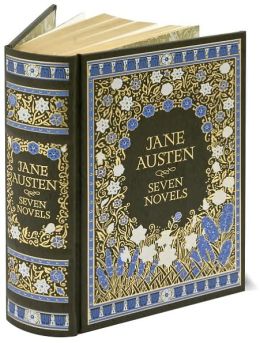
(11) My leather-bound Jane Austen set. It's beautiful. See? 


Always,
Your Bibliomaniac

My bookshelf

This weekend, I reorganized my bookshelves.
For those of you bibliomaniacs out there who have moved or taken another opportunity to take all of your books off of the shelves and rearrange them... you know it's a little like this.

1) You get really excited when you start taking the books down... you're going to be able to look at all of your old books again and basically reconnect with all of those old friends you've had up on the shelf. And you're giddy, man.
2) And then you have all of those books down and you have to re-read a few of them. But which ones? ALL OF THEM.
3) And then you've been upstairs for hours perusing your stash and your mom comes into your room and she realizes your entire floor is covered in books.
Ditto your bed.
Ditto your desk.
Ditto your dresser.
And some of the hallway.
So you're like, "Uh, Mom! Isn't this cleaning great??" And she's like...
4) And she tells you to put everything away but you're all
But she's like
5) So then you gotta run around and clean them all up really fast. You quickly think up a legit-seeming organization system, and away you go to create it.
6) An hour or two later, it's finished. You look at your beautiful bookshelves all neat and clean. And you realize that you've actually accomplished two things with all your heavy lifting. Organized bookshelves (basically):
AND amazing new muscles from lifting all your books. Or it feels that way.


~~~~~
So yes. I went through all of these steps. And now my bookshelves are beautiful.


Always,
Your Bibliomaniac

Friday, June 7, 2013

Still posting...

This is finally coming along! I'm still adjusting the format, but I think it's looking nice. Moving this quickly, mistakes happen. Let me know if you find any!

This morning I had a sad moment. Clearly, I've never had a comment on this site, but I hope to get a community started here soon. Anyway, when I woke up this morning I looked at my phone and got so excited because I had an e-mail saying I had a comment!! But then I looked at the comment and it was spam. Upsetting.

Point of post: I'm posting, please post back.

I also accept the possibility that no one reads this.

Oh well.


Always,
Your Bibliomaniac

Tuesday, June 4, 2013

She's baaaack...

Your Bibliomaniac here! I'm back from school and I'm ready to rumble. My format has been updated so it is far easier for me to post now (thank the Dear Heavens). I will continue posting and get you lots of new books I have read!

Let me know if you're reading this and what you're reading otherwise! I hope to hear from some other bibliomaniacs soon!

Always,
Your Bibliomaniac

Monday, December 31, 2012

Happy New Year!

Happy New Year to my (still unidentified and probably nonexistent) readers! I hope 2012 brought you happiness, blessings, and abundant books and that 2013 will bring even greater joys! Here's a link to a listing of some of literature's greatest annual awards and their recipients or the current nominees for 2012.

National Book Awards:
http://www.nationalbook.org/nba2012.html#.UOHgsL-9Kc0
•From this list, the only book I picked up was This is How You Lose Her, which I neglected to finish. I may try it again soon but I lost the a lot of my interest in it several chapters in when the narrator changes without explanation, the new one lacking enough energy and wit to keep me entertained. Powerfully written in certain pockets, but woefully lagging in others.

National Book Critics Circle Award nominees:
http://www.huffingtonpost.com/mobileweb/2012/01/22/national-book-critics-circle-awards-_n_1221954.html
•I haven't read any of these books yet but they look interesting. Two books that particularly caught my attention from this list are Open City and The Marriage Plot, and I need to look into these further.

The Newberry and Caldecott Awards, both for young fiction:
http://trevorcairney.blogspot.com/2012/01/2012-newbery-caldecott-medal-winners.html?m=1
•I haven't read either of the winners but I'm still intrigued by YA fiction so there's a good chance I'll try one of these down the road. Both have been highly acclaimed so far.

The Pulitzer Prize:
http://en.m.wikipedia.org/wiki/2012_Pulitzer_Prize
•Perhaps one of the world's most renowned and coveted literature awards, the fiction Pulitzer Prize was not awarded this year because none of the three nominated works (all of which seem vastly interesting to me) won a majority of the Pulitzer panel's votes (as detailed on this Wikipedia page). I can't help but notice the recurrence of Malcolm X: A Life of Reinvention on award lists, which has me very curious about it.

The PEN/Faulkner award nominees:
http://litreactor.com/news/finalists-for-the-2012-penfaulkner-award-announced
•I haven't read any of these books but several sound interesting, particularly the three-part novella series by Anita Desai, whose work on Baumgartner's Bombay I enjoyed.

The Nobel Prize in Literature was awarded to the Chinese author Mo Yan, whose page on the Nobel Prize website can be found here:
http://www.nobelprize.org/nobel_prizes/literature/laureates/2012/yan.html
•I have not read any of this author's work.

*The Bibliomaniac Book of the Year Award this year goes to Catch-22 by Joseph Heller. It wasn't written/released this year or even this century but I read it for the first time this year and thought it was wonderful! This is a stellar read and I hope to get its review posted here soon. This fought an extremely difficult war against The Night Circus, a new work by Erin Morgenstern, for the top spot. Other finalists for my list also included Hot, Flat, and Crowded by Thomas L. Friedman and Crime and Punishment by Fyodor Dostoyevsky.


If you've read any excellent works in 2012, let me know! Post in the comments or drop me a line at YourBibliomaniac@gmail.com. Happy holidays everyone!
Always, Your Bibliomaniac

Thursday, August 16, 2012

Soooo there's this thing called school.


It's August. For a lot of you 9-to-5ers out there, this means hot weather, maybe a quick getaway with your family, and too many tourists clogging up your route to work. For students and their families (prime example: Your Bibliomaniac and her family) it means BACK TO SCHOOL. Here's the problem: when I am away at school, I do not have access to OneNote, which is the program I have always kept my book reviews on. This means updates from me will be less frequent and less orderly. There are still many more finished reviews which haven't been uploaded because it takes quite a lot of time to copy them from my documents, format them properly, and send them out into cyberspace. There will not be time for me upload these before I hit the road. For you, darling reader, this means:
1) No more reviews until I read and finish a new book. I'm currently reading Hot, Flat, and Crowded by the brilliant Thomas L. Friedman, so that will be coming soon.
2) My format may change (just a li'l).
3) When I get home for break, you'll get a barrage of previously-written reviews like there was late last night/early this morning.
Peace, love, books!
Always,
Your Bibliomaniac

Wednesday, August 15, 2012

Proudly human

After making over 50 posts in less than 24 hours, Blogger conferred on me a great honor. They sent me an e-mail asking whether I was robotic. Now I have to decipher one of those number-and-letters squiggly box pictures whenever I post, and they're nearly impossible to read, but apparently prove that I am a human being. Ladies and gents of the WWW, I would like to confirm that I, Your Bibliomaniac, am not a robot. But let me quickly explain why I have been able to post so much so quickly:
Your Bibliomaniac is a real, live person who has been enjoying and reviewing the books posted here for 3 years. This means that her poor little OneNote journal has accumulated over one hundred pages of reviews and book data. When she finally decided this summer to do something with those pages (not necessarily something useful, but hopefully you... she still doesn't know who you are... like it), she was able to very quickly upload a lot of content. It is really extraordinarily time-consuming and she may do it at 2am occasionally, but it must be published.
And so, my dear reader, you are now reading a lot of content all at once. And you will have more soon. But I will not be posting 50+ new books' reviews every day. Like you, I am but a simple reader. I love good reading, but I am, alas...
                                                                                                                                   only human.


Always,
Your (homo sapien) Bibliomaniac

Tuesday, July 31, 2012

Post numero uno.

So this is where book news will go... I'll find some, and if you find any, please send it to me. I'll make sure to give you credit.

Always,
Your Bibliomaniac